Create:
June 21, 2024
Soft Seat vs Metal Seat Valves: What Engineers Should Know
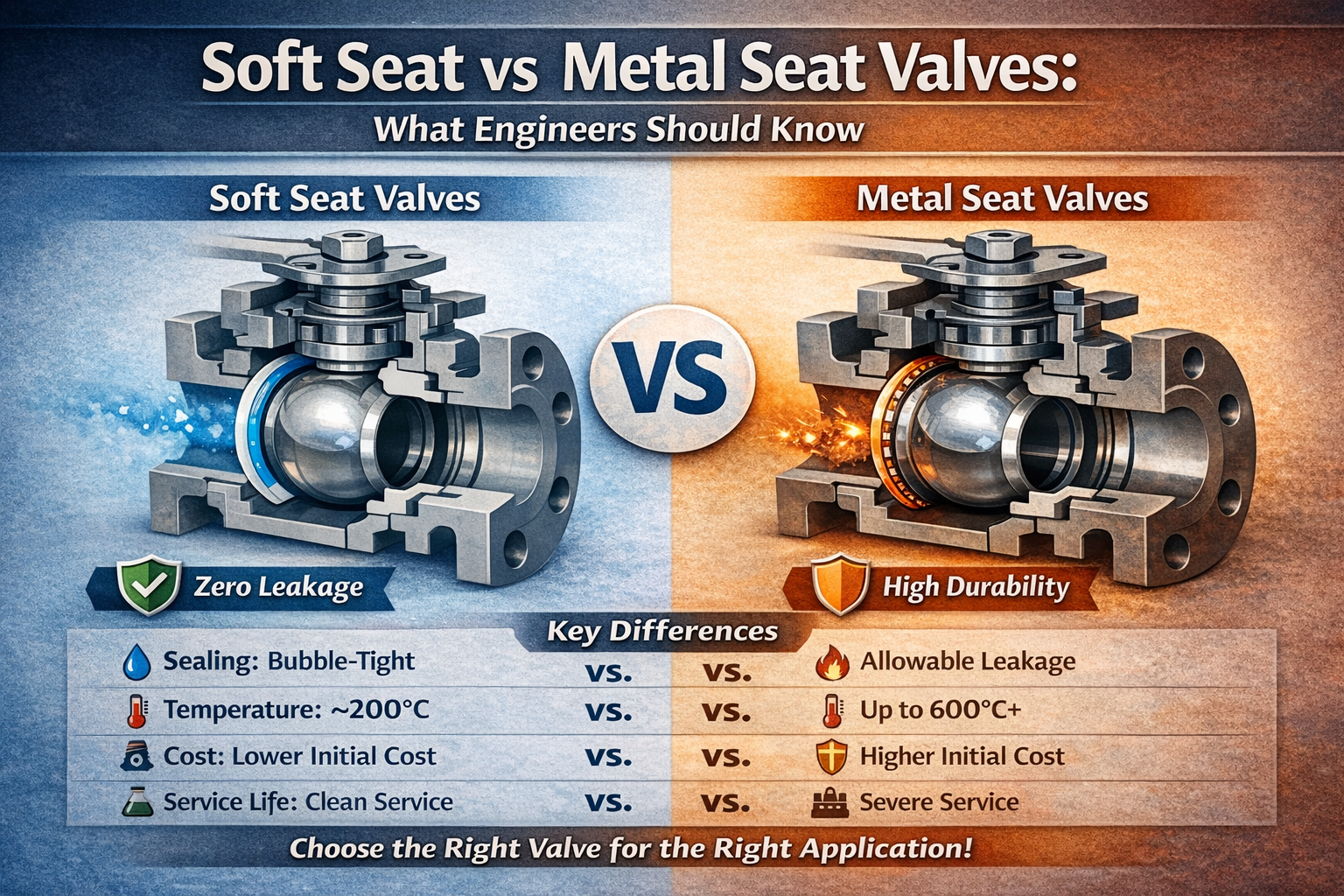
Choosing between soft seat and metal seat valves is not just a material decision—it directly affects leak tightness, temperature limits, service life, safety, and maintenance cost. Engineers, EPCs, and plant operators need to understand where each seat type excels and where it fails.
Below is a practical, engineering-focused breakdown you can use for specifications, design reviews, and procurement decisions.
1. What Is a Valve Seat?
The seat is the sealing interface between the closure element (ball, disc, gate) and the valve body.
- Soft seat → non-metallic insert (PTFE, RPTFE, PEEK, elastomer)
- Metal seat → metal-to-metal sealing (SS, Stellite, hard-faced alloys)
The seat choice defines:
- Leakage class
- Operating temperature
- Pressure capability
- Wear and erosion resistance
2. Soft Seat Valves (PTFE, RPTFE, PEEK)
How They Seal
Soft materials deform elastically, filling microscopic surface imperfections and creating bubble-tight shutoff.
Advantages
- Excellent sealing (API 598 / ISO 5208 zero leakage)
- Low operating torque
- Ideal for on/off isolation
- Good chemical compatibility
- Lower cost
Limitations
- Temperature sensitive
- Cold flow / creep under long-term load
- Vulnerable to erosion, solids, and steam
- Can fail silently after thermal cycles
Typical Limits
Material Max Continuous Temperature
PTFE~200°C
RPTFE~230°C
PEEK~260–280°C
Best Applications
- Water & wastewater
- Oil & gas (clean service)
- Chemicals (corrosion-driven)
- Pharmaceutical & food
- Low-to-medium temperature systems
3. Metal Seat Valves
How They Seal
Sealing relies on precision machining + surface hardness rather than deformation. Often enhanced with:
- Stellite overlay
- Tungsten carbide
- Hard chrome
Advantages
- High temperature capability
- Handles abrasive, dirty, or flashing media
- Resistant to erosion and cavitation
- Long life in severe service
- Can tolerate thermal shock
Limitations
- Not bubble-tight (usually Class IV–V leakage)
- Higher operating torque
- Higher cost
- Requires precise alignment and machining
Typical Capability
- Temperature: 400–600°C+
- Steam, slurry, solids, high velocity flow
Best Applications
- Power plants (steam)
- Refining & petrochemical
- Slurry / ash handling
- High-temperature hydrocarbons
- Severe service throttling
4. Leakage Expectations (Critical for EPC Specs)
Soft Seat --> Bubble-tight (API Class VI)
Metal Seat --> Allowable leakage (API IV–V)
⚠️ Important
If your spec says “zero leakage”, metal seat valves usually cannot comply unless special designs are used.
5. Temperature & Pressure Reality Check
Soft seats fail gradually:
- Thermal expansion mismatch
- Gasket softening
- Seat creep
- Loss of preload after cycles
Metal seats fail predictably:
- Wear
- Scoring
- Surface damage (but still operable)
👉 For continuous high temperature, metal seats are safer and more predictable.
6. Cost vs Lifecycle Trade-Off
Soft Seat Valves
- Initial cost: Lower
- Maintenance: Lower in clean service
- Failure mode: Sudden leakage
- Lifecycle cost: Low to medium
Metal Seat Valves
- Initial cost: Higher
- Maintenance: Lower in severe service
- Failure mode: Gradual leakage
- Lifecycle cost: Medium to low in severe service
7. Common Engineering Mistakes
❌ Using soft seats in:
- Continuous steam service
- Dirty or abrasive flow
- High-frequency thermal cycling
❌ Using metal seats when:
- Bubble-tight shutoff is required
- Low torque actuators are specified
- Clean, low-temp service exists
8. Quick Selection Guide
Choose Soft Seat when:
- Zero leakage is critical
- Media is clean
- Temperature < 230°C
- On/off isolation
Choose Metal Seat when:
- Temperature is high
- Media contains solids or erosion
- Throttling or severe service
- Long-term durability matters
Final Thought
There is no “better” seat type—only correct application.
Most valve failures come not from poor manufacturing, but from seat selection mismatched to real operating conditions. Engineers who understand this distinction reduce downtime, leaks, and costly retrofits.
Latest news

Leadership Philosophy
February 14, 2025
Read more
Major Mission
December 25, 2024
Read more
Market Trends in the Valve Industry: Key Developments and Projections for the Next Five Years
December 26, 2024
Read more
Most Valve Failures Are Material Failures, Not Design Failures
December 29, 2025
Read more
The Six Main Types of Industrial Valves — and When to Use Them
December 30, 2025
Read more
Why Gate Valves Should Not Be Used for Throttling
December 30, 2025
Read more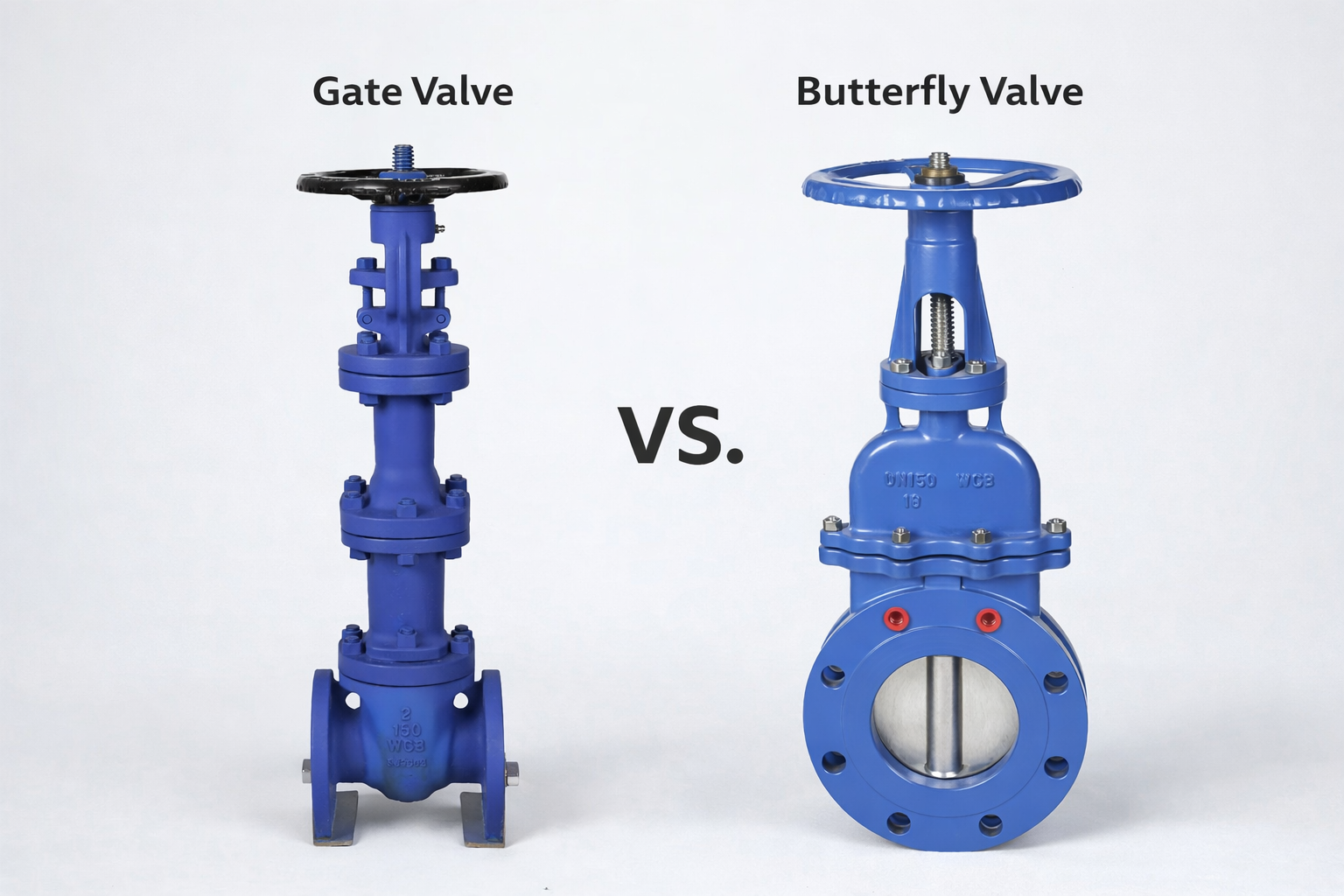
Butterfly vs Gate Valves: Choosing the Right Valve for Large Pipelines
January 1, 2026
Read more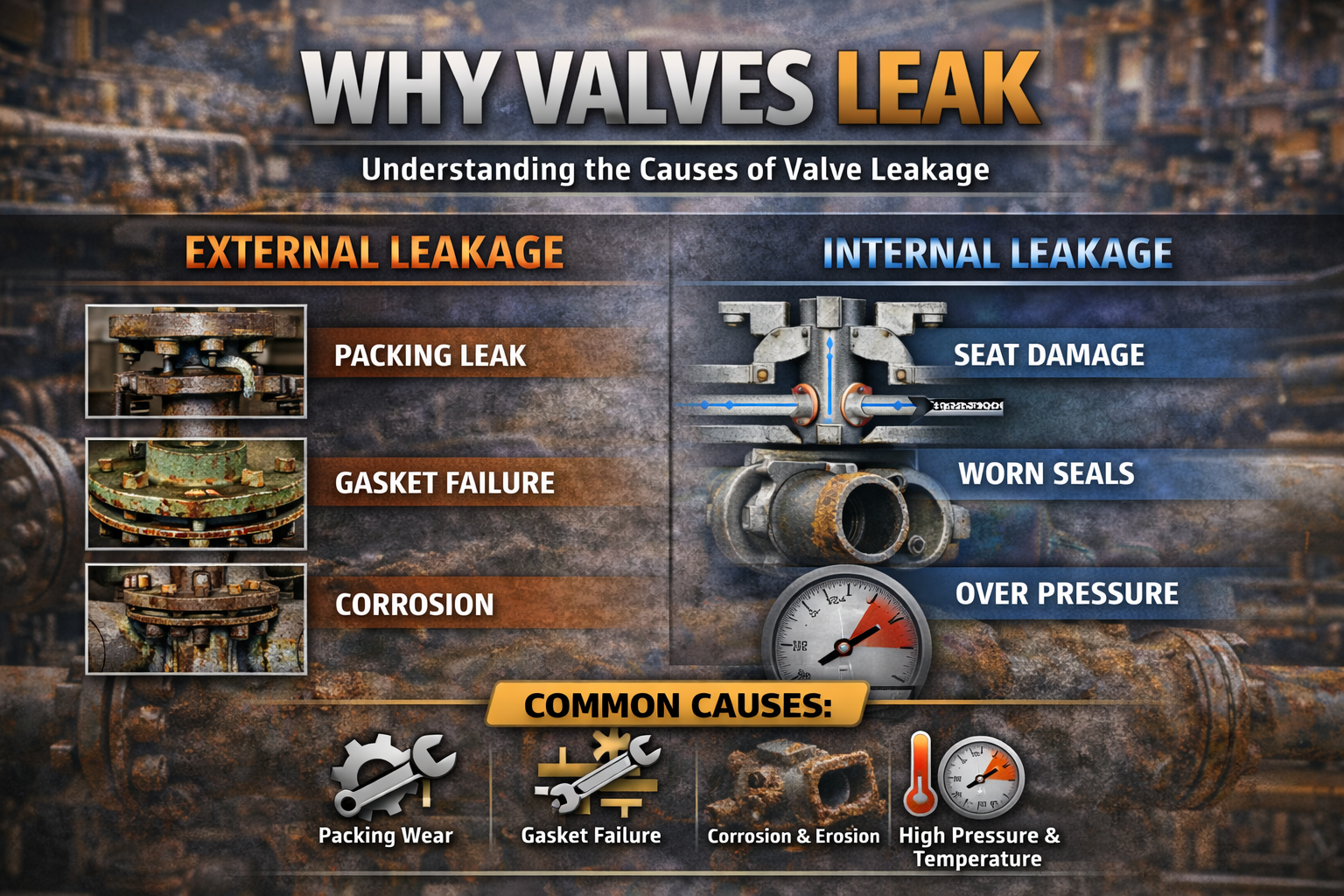
Why Valves Leak: The Real Reasons Behind a Common Industrial Problem
January 2, 2026
Read moreSoft Seat vs Metal Seat Valves: What Engineers Should Know
January 3, 2026
Read more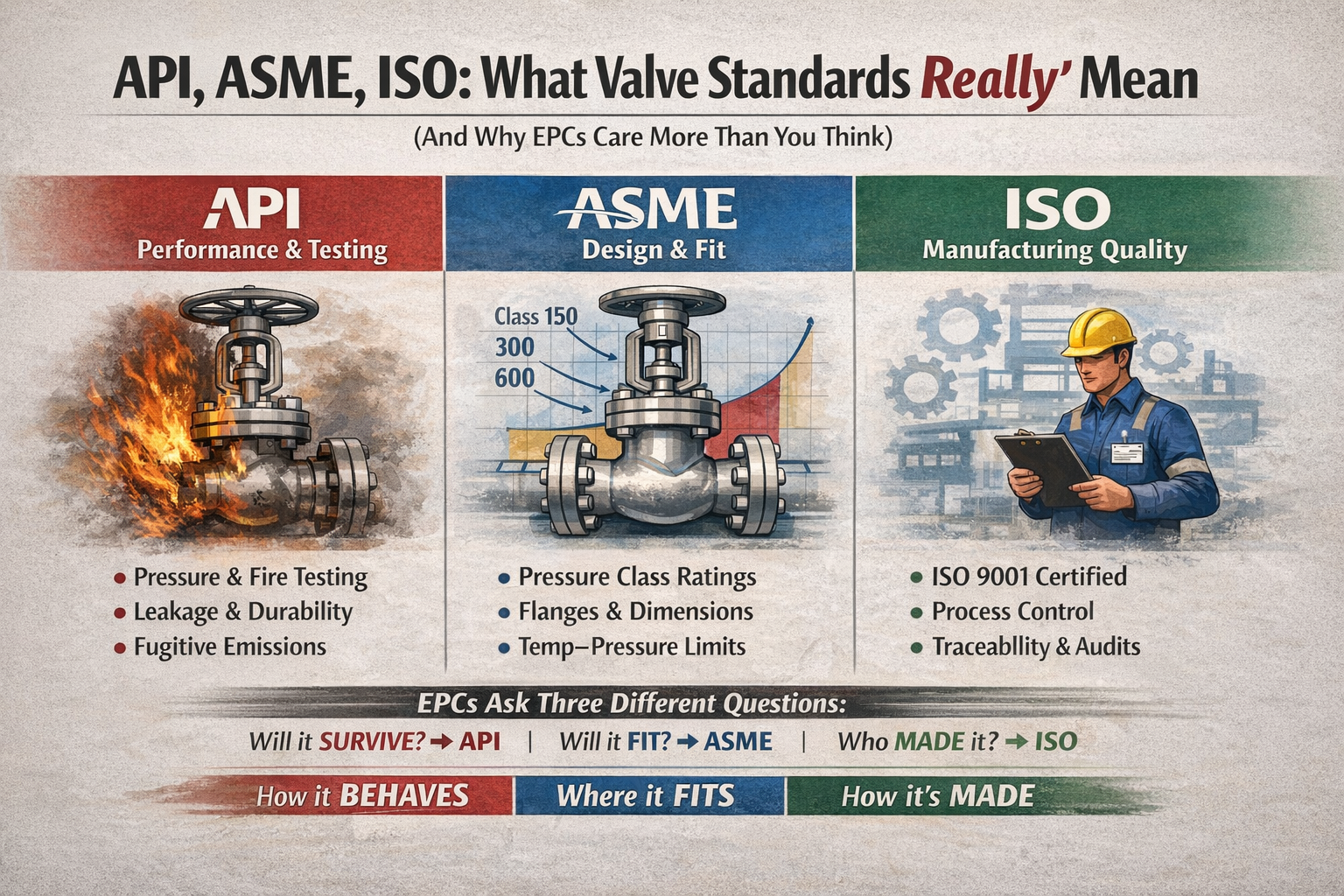
API, ASME, ISO: What Valve Standards Really Mean
January 4, 2026
Read more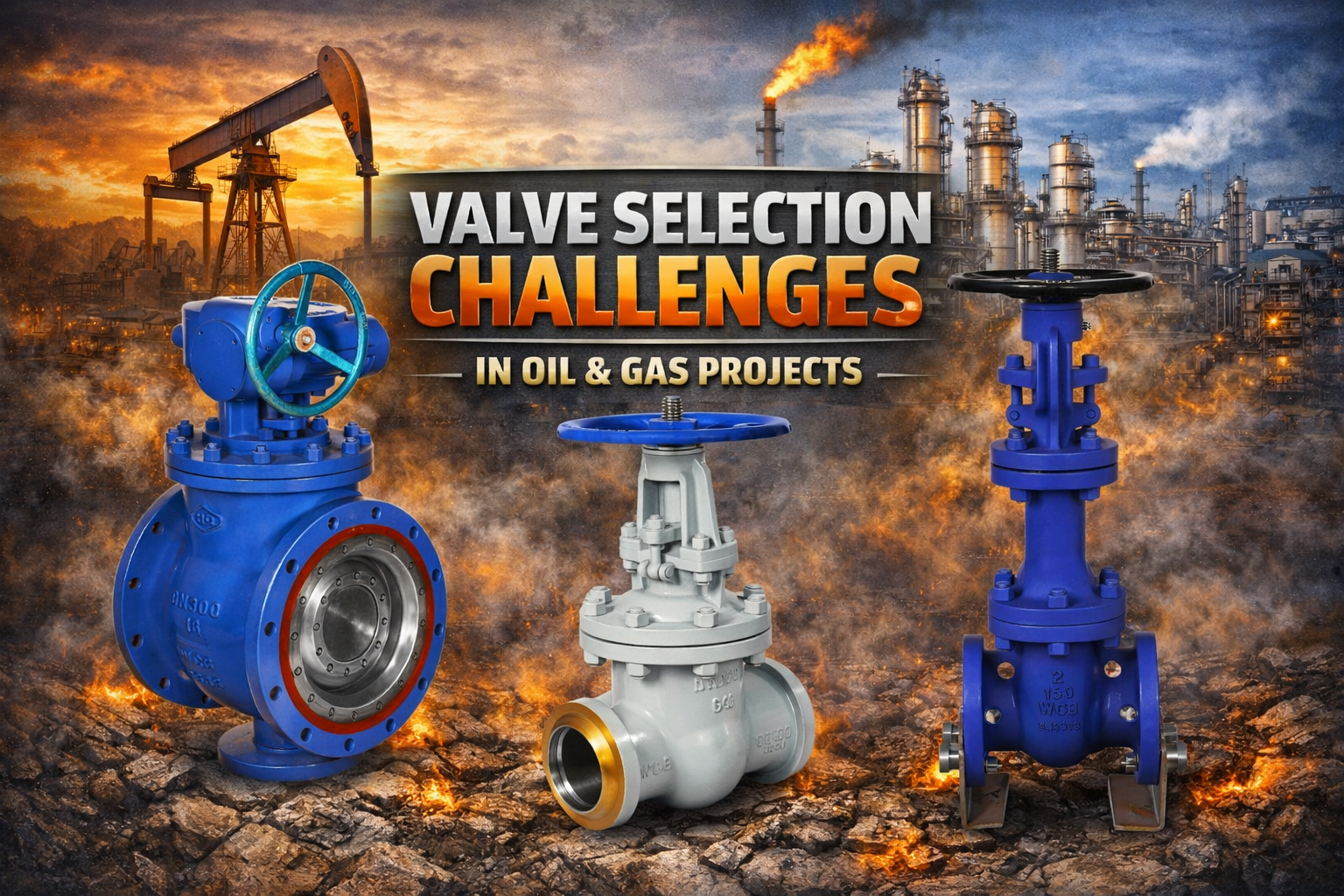
Valve Selection Challenges in Oil & Gas Projects
January 5, 2026
Read more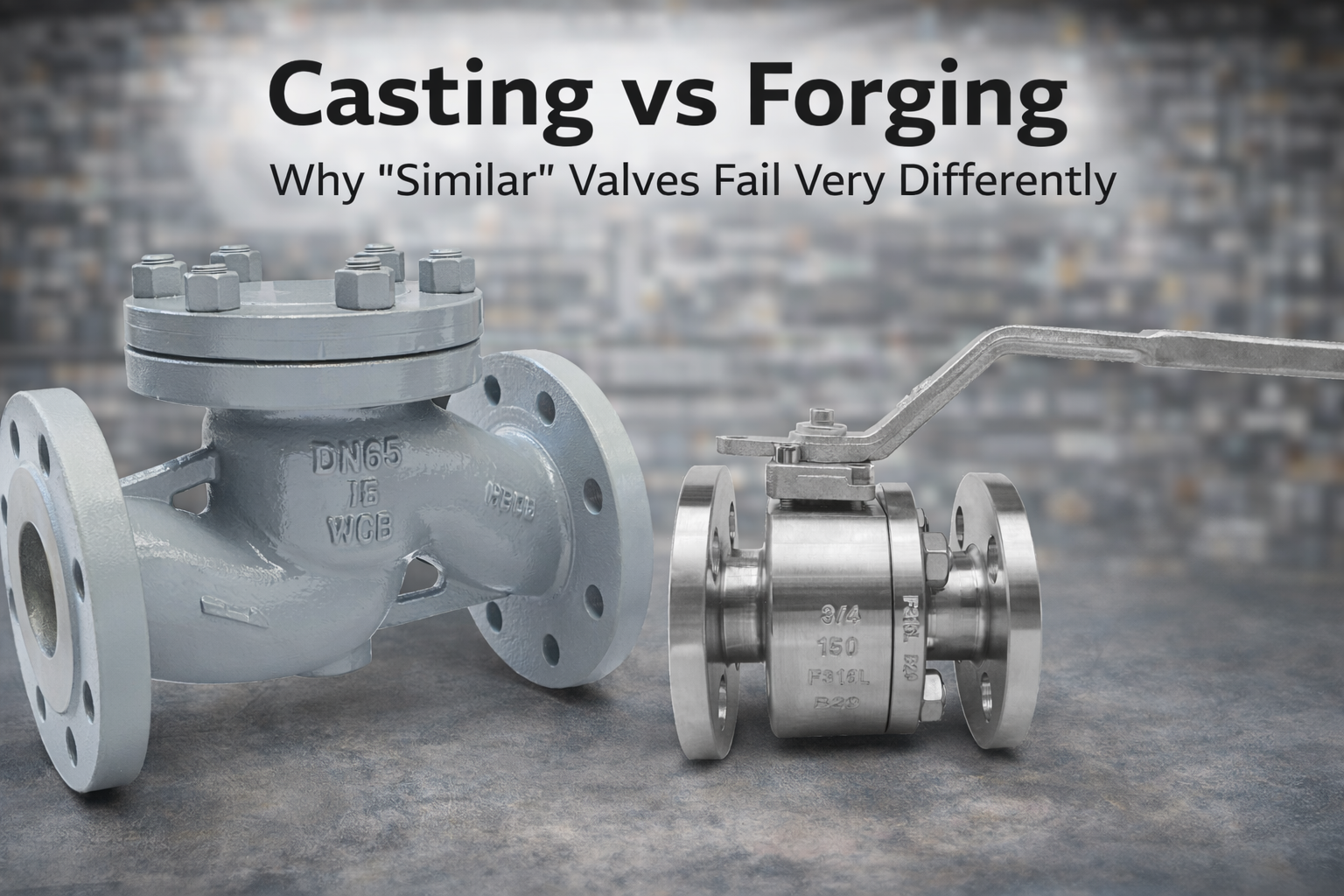
Casting vs Forging
January 6, 2026
Read more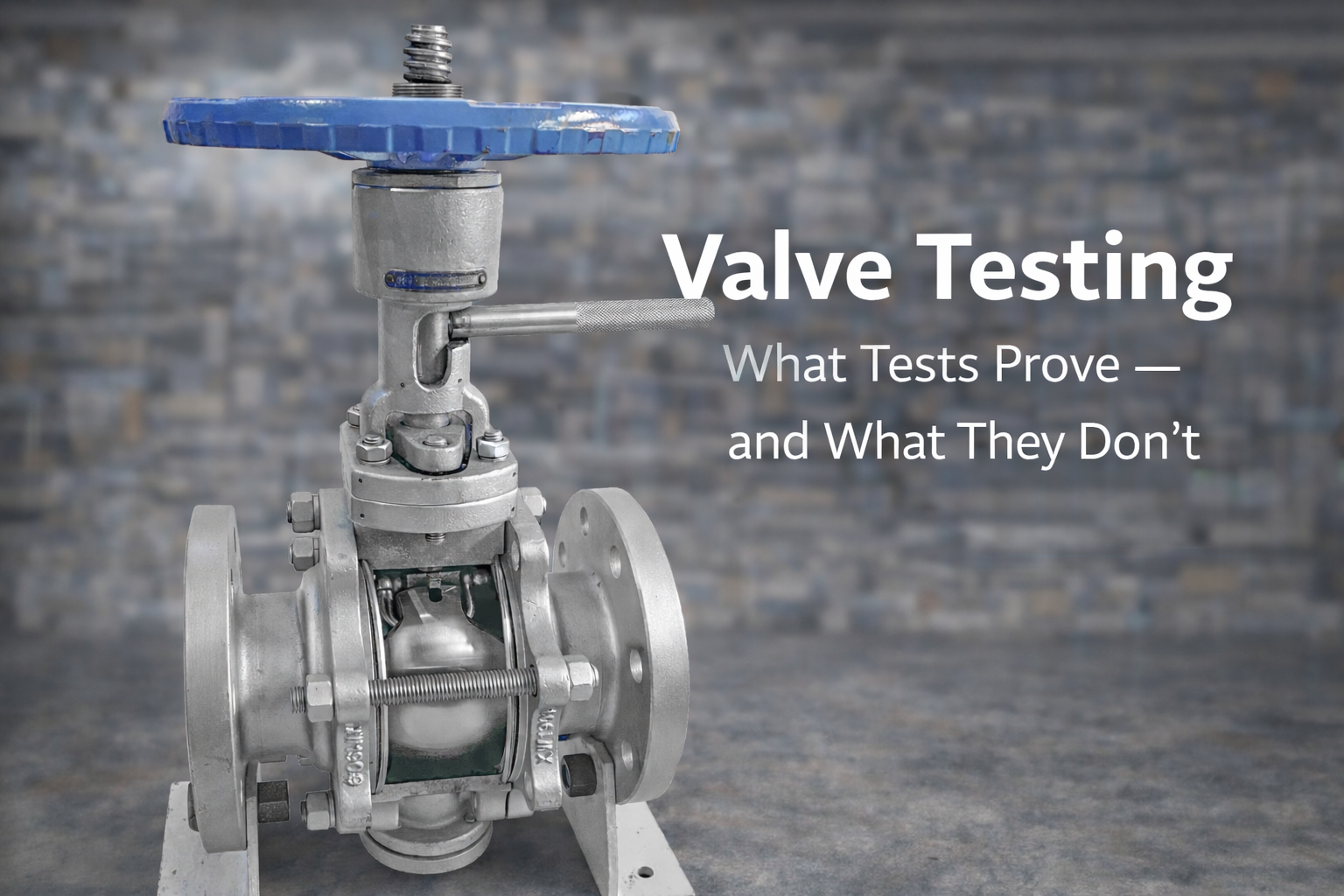
Valve Testing: What Tests Prove — and What They Don’t
January 8, 2026
Read more
10 Things Nobody Told You About Being a Web Designer
June 21, 2024
Read more
5 Web Design Blogs You Should Be Reading
June 21, 2024
Read more
7 Ways To Improve Website Usability And Accessibility
June 21, 2024
Read more
20 Myths About Web Design
June 28, 2024
Read more
Designers Who Changed the Web
June 21, 2024
Read more
The History Of Web Design
June 21, 2024
Read more
10 Great Examples of Responsive Websites
June 21, 2024
Read more
10 Quick Tips About Blogging
June 21, 2024
Read more
7 of the Best Examples of Beautiful Blog Design
June 21, 2024
Read more
